

Liposomes, Phytosome and Niosome
The formulation of various liposomal, phytosomal, and niosomal systems is carried out in the Research and Development (R&D) department of Behinpharmed using advanced techniques. Initially, following technical meetings, appropriate preparation methods and protocols are carefully evaluated. Subsequently, laboratory-scale samples of these lipid-based nanocarriers are developed for the requested compounds.
During the preparation process, critical parameters such as stability, particle size, and surface charge are closely monitored and controlled. After optimizing these characteristics, production is scaled up according to the required quantity. Due to the involvement of research, development, and sample preparation, the associated production costs in this stage are relatively higher.
Microsphere
Microfluidic technology in Behinpharmed enables precise production of microspheres by controlling fluid behavior at the microscale within specially designed channel . The primary methods include flow-focusing and droplet-based microfluidics. In flow-focusing devices, two phases (typically a continuous phase like oil and a dispersed phase like water or polymer solution) converge through a small orifice, where the continuous phase squeezes the dispersed phase to form uniform droplets. The droplet size is precisely tunable by adjusting the flow rates and ratios of the phases.
After droplet formation, the microspheres are solidified through processes such as solvent evaporation, photopolymerization, or gelation, depending on the material (e.g., PLGA, hydrogels, or lipids). This technique produces monodisperse microspheres with narrow size distributions (typically 1–50 µm), which is critical for applications like drug delivery where uniformity ensures consistent release profiles.
NanoEmulsion
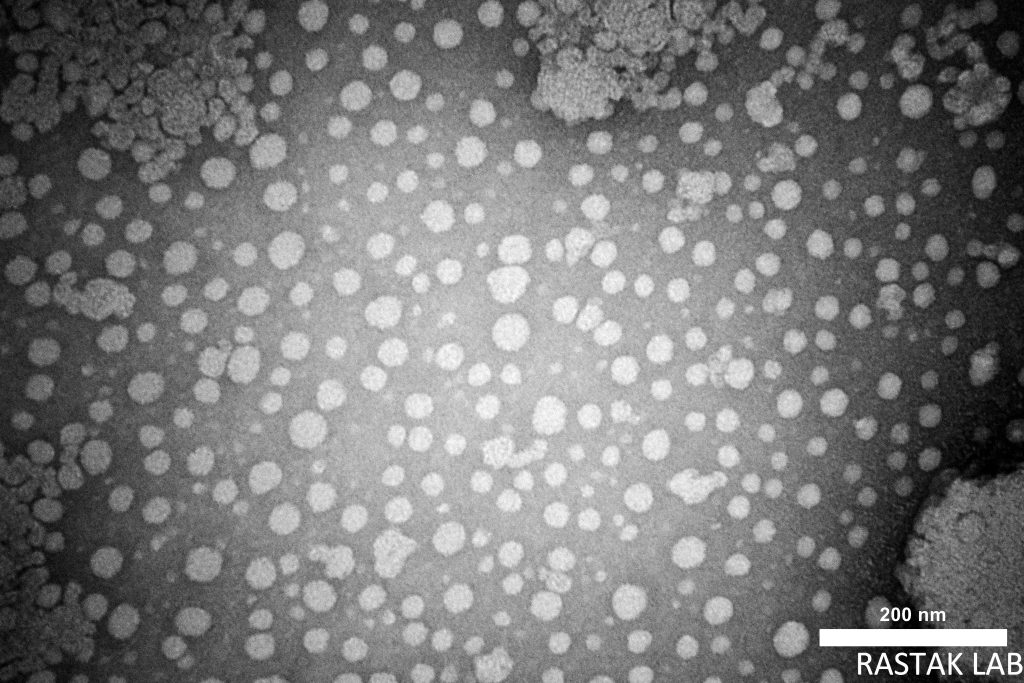
Nanoemulsion produced in Behinpharmed using microfluidic techniques relies on precise control of fluid dynamics to generate nanoscale droplets (typically 15–100 nm) with high uniformity and stability. The primary methods include microfluidization (high-energy) and spontaneous emulsification (low-energy).
In microfluidization, two immiscible phases (e.g., oil and water) are forced through a microfluidic device under high pressure, generating intense controlled shear forces that break down droplets to the nanoscale—this approach produces nanoemulsions with droplet radii in the 40–100 nm range using relatively low surfactant concentrations.
Additional microfluidic configurations include flow-focusing and T-junction geometries, where droplet size is precisely tunable by adjusting flow rate ratios. After formation, nanoemulsions exhibit superior properties compared to conventional emulsions, including longer shelf-life, enhanced bioavailability, and improved solubilization of lipophilic drugs. The microfluidic approach addresses key challenges of traditional methods (ultrasonication, high-pressure homogenization) by providing better droplet size tunability, reduced surfactant requirements, and production of monodisperse nanoemulsions critical for drug delivery applications.
Solid Nano particle
Solid nanoparticle (SNP) produced in Behinpharmed using microfluidic techniques employs controlled mixing and rapid precipitation within microreactors to generate uniform nanoscale particles. The primary methods include flash nanoprecipitation (FNP), microemulsion-based techniques, and controlled antisolvent precipitation.
In flash nanoprecipitation, a polymer or lipid dissolved in a water-miscible solvent (e.g., acetone, ethanol) is rapidly mixed with an antisolvent (typically water containing stabilizers) in a microfluidic device with confined impingement or herringbone mixing geometries; the sudden change in solubility causes instantaneous precipitation of nanoparticles with sizes ranging from 20–500 nm.
The particle size is precisely tunable by adjusting the flow rate ratio, solvent/antisolvent composition, and stabilizer concentration. In microemulsion-based approaches, a pre-formed microemulsion containing the solid material is diluted, triggering nanoparticle formation through supersaturation and precipitation. Microfluidic chips utilize various mixing configurations including flow-focusing, T-junction, and staggered herringbone mixers (SHM) to achieve rapid mixing (<100 ms) and homogeneous nucleation, which produces nanoparticles with narrow size distributions (low polydispersity). This approach offers significant advantages over batch methods (solvent evaporation, sonication) by providing superior control over particle size, enhanced reproducibility, reduced surfactant requirements, and the ability to scale through numberization (multiplying parallel channels). Solid lipid nanoparticles (SLNs) and polymeric nanoparticles are commonly produced using these techniques for drug delivery applications, where uniformity ensures consistent drug loading and release profiles.
Contact Us
Address : 1st Noavari, Pardis Science and Techology Park, Pardis, Tehran
Phone : +98 21 76250589 , +98 900 518 3096
Email: contact@behinpharmed.com